
Five pillars. One governed system.
Price, process, policy, performance and payments, integrated into one system that connects strategy to daily execution.
Problems We Solve
- Business units operate in silos with no unified view of cost, spend or supplier performance
- Value is identified but never realised — savings evaporate between strategy and execution
- Supplier costs keep rising with no structured commercial response
- Contracts are signed, not managed — obligations drift, pricing changes go unnoticed
- Payments do not align to commercial strategy — AP is a cost centre, not a value creator
- No single framework connects price, process, policy, performance and payments
5–20%
Cost Reduction
10–25%
Process Efficiency
5–12%
Spend Control
p5 Framework
Cut cost and close value gaps across the enterprise
Most organisations lose value in the gaps between decisions: pricing set in one place, processes run in another, policy applied inconsistently, and no single view of performance or payments. The p5 framework closes those gaps. It connects five pillars (Price, Process, Policy, Performance and Payments) into one system that links strategy to daily execution, with clear governance and accountability across the enterprise.
The result is value that’s measured and enforced every day, not just promised in a strategy document.
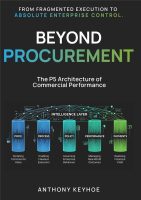
STRATEGIC PUBLICATION
From Fragmented Execution to Absolute Enterprise Control
Beyond Procurement maps the architecture that unifies price, process, policy, performance and payments into one intelligent commercial operating system.
Price
The continual assessment and governance of the strategic value drivers behind purchasing decisions, ensuring alignment with evolving micro- and macro-economic conditions.
Strategic Sourcing
Shapes commercial outcomes before market engagement by structuring demand, aligning supplier economics, and creating the conditions for sustainable pricing advantage.
Category Management
Structures enterprise spend into aligned categories, reducing complexity, consolidating suppliers, and enabling consistent, disciplined purchasing decisions across the organisation.
Supply & Demand Forecasting
Anticipates demand and market shifts early, enabling organisations to secure supply, reduce volatility, and influence pricing before pressure emerges.
Commercial Modelling
Designs pricing structures and contract mechanisms that balance cost, risk, and performance, ensuring commercial outcomes remain controlled over time.
Spend Analytics & Management
Uses AI to transform spend into actionable intelligence, improving visibility, controlling behaviour, and ensuring negotiated value is realised consistently across operations.
Process
The design, optimisation, and execution of procurement and operational workflows to ensure efficiency, scalability, and alignment with organisational strategy.
Process & Workflow Design
Removes redundant steps and legacy approvals, then routes tasks, approvals and information to the right people at the right time, making compliant execution the simplest path.
Tender & RFx Management
Structures supplier engagement through consistent, transparent processes, ensuring fair competition, comparability, and disciplined sourcing decisions across all categories.
Procure-to-Pay Execution
Defines how the organisation buys day to day, from requisition to purchase order and receipt, matching each purchase to the right channel so negotiated value is realised.
Process Automation & Digital Enablement
Hands repetitive, rules-based tasks such as order creation, contract routing and supplier onboarding to technology, delivering touchless execution, fewer errors and real-time visibility.
Operating Model Design
Defines roles, responsibilities, and delivery structure, ensuring procurement operates efficiently, consistently, and with clear accountability across the organisation.
Policy
The establishment of governance frameworks, controls, and standards that guide decision-making, manage risk, and ensure alignment with organisational and regulatory expectations.
Procurement Policy Governance
Establishes clear rules and controls that guide purchasing decisions, balancing flexibility with the discipline required to maintain commercial integrity.
Guided Buying & Compliance Design
Designs purchasing pathways that make compliant behaviour easy, directing users toward preferred suppliers and contracted outcomes without friction.
Risk & Resilience Management
Identifies and mitigates supply chain risks early, strengthening resilience and ensuring continuity in the face of disruption and uncertainty.
ESG & Sustainability Standards
Integrates environmental and ethical standards into procurement decisions, ensuring responsible sourcing while protecting long-term organisational reputation and value.
Corporate Governance
Ensures transparency, accountability, and ethical conduct across procurement, providing confidence in how organisational funds are committed and managed.
Performance
The measurement, management, and continuous improvement of procurement and operational outcomes to ensure sustained value realisation and organisational alignment.
Performance Analytics & KPIs
Measures procurement outcomes, linking activity to value and ensuring performance insights drive continuous improvement across the organisation.
Contract Lifecycle Management
Manages contracts throughout their lifecycle, ensuring terms are enforced, obligations met, and value is protected over time.
Supplier Relationship Management
Builds structured supplier relationships that improve performance, encourage collaboration, and drive long-term value beyond transactional engagement.
Asset Lifecycle Management
Manages assets from acquisition to disposal, ensuring optimal utilisation, cost control, and alignment with operational requirements over time.
Stakeholder & Change Management
Aligns stakeholders and drives adoption of new processes, ensuring procurement improvements are implemented effectively and sustained over time.
Payments
The optimisation of financial execution, cash flow, and transactional integrity to ensure value is realised, protected, and sustained at the final stage of the procurement lifecycle.
Accounts Payable Automation
Automates invoice capture, matching and validation with AI, improving accuracy, reducing effort, and enabling faster, more reliable financial execution.
Working Capital Optimisation
Controls payment timing to balance liquidity and supplier relationships, improving cash flow without compromising operational performance.
Supply Chain Finance
Supports suppliers with access to funding, strengthening supply stability while allowing organisations to retain control of cash flow.
Fraud Detection & Security
Protects financial transactions through AI-driven monitoring, controls and anomaly detection, reducing risk and preventing unauthorised or fraudulent activity.
Dynamic Discounting
Captures value through early payment discounts, turning routine transactions into consistent financial returns without additional risk.